Luxury Real Estate in France: The Complete Guide to Buying an Exceptional Property
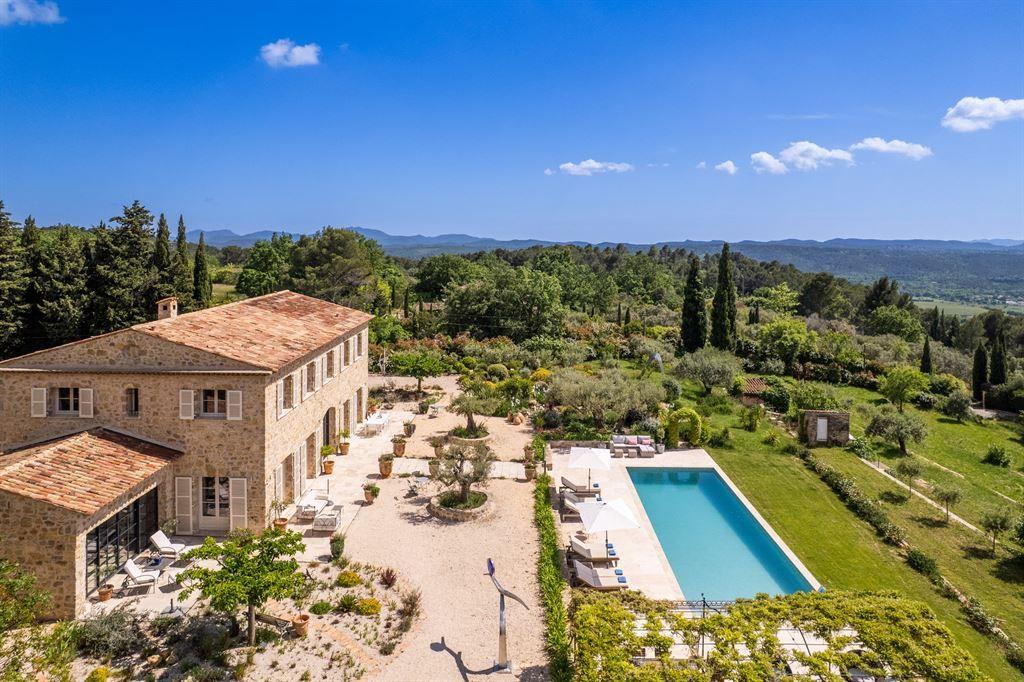
How do you recognise a luxury property, spot the best opportunities, access off-market homes and successfully complete a high-end property purchase in France?
Luxury real estate in France holds a special appeal for French and international buyers alike. Private mansions (hôtels particuliers) in the heart of Paris, contemporary villas on the French Riviera, wine estates in Provence, historic properties in Normandy or exceptional chalets in the Alps: the French market offers a remarkable variety of rare properties, often steeped in history and set in privileged locations.
But buying a luxury property is about much more than having a substantial budget. Above all, it means knowing how to recognise the true value of a property, understanding the specific features of this market, identifying opportunities that are sometimes invisible on traditional platforms and securing every step of the purchase.
In a market where discretion, exclusivity and the quality of advice play an essential role, the right support can make all the difference.
Everest Maison & Conseil offers this guide to help you understand the key issues of luxury real estate in France and approach your purchase with method, high standards and peace of mind.
1. What is luxury real estate?
Luxury real estate, also called prestige or high-end real estate, refers to a specific segment of the property market made up of homes whose value rests on a combination of exceptional criteria.
Contrary to popular belief, price is only one of the elements that define a luxury property. An expensive property is not necessarily an exceptional one.
True distinction lies in the combination of several features: location, architecture, quality of materials, history, amenities, surroundings and rarity.
The features of a luxury property
Several criteria set a high-end property apart.
A privileged location
Location remains one of the decisive factors. It may be a particularly sought-after neighbourhood, a historic address, an exceptional sea view, unspoilt natural surroundings or proximity to iconic landmarks.
In Paris, certain arrondissements and historic districts attract particularly strong demand. On the French Riviera, properties with a sea view, privileged access to the coast or a commanding position are especially sought after.
Remarkable architecture and character
A private mansion, an architect-designed house, a Provençal bastide, a restored château or a contemporary villa can all belong to the luxury segment.
Architectural identity, harmonious volumes, the quality of the living spaces and the character of the property all contribute greatly to its value.
High-quality finishes and materials
Period parquet floors, natural stone, bespoke joinery, high ceilings, integrated home automation, premium equipment or generous reception rooms: the finishes and amenities must match the expected level of excellence.
Exceptional surroundings and lifestyle
Landscaped gardens, wooded grounds, a swimming pool, a panoramic terrace, outbuildings, direct sea access or an open view are all features that can enhance a property's appeal.
Rarity
This is often the most decisive criterion. Some properties simply cannot be reproduced: a unique address, an exceptional plot, historic architecture or an incomparable location.
Rarity is also what explains why certain properties remain highly attractive over time.
The main types of luxury property in France
The French market stands out for the diversity of its real estate heritage:
- In Paris: private mansions, grand reception apartments, penthouses, Haussmann-style apartments and properties with private terraces or gardens.
- On the French Riviera: contemporary villas, waterfront properties, homes with sea views and private estates.
- In Provence: bastides, Provençal farmhouses (mas), wine estates and properties with extensive grounds.
- In the Alps: luxury chalets, ski-in/ski-out properties and high-end residences.
- On the Atlantic coast: seaside villas, historic properties and architect-designed houses.
- In Normandy and other historic regions: manor houses, châteaux, character estates and country properties.
Each type meets different expectations. The choice will therefore depend above all on the desired lifestyle and the buyer's wealth strategy.
2. How to identify the luxury property that suits you
The first challenge of a high-end property project is defining precisely what you are looking for.
At this level of the market, buyers often have specific expectations: a main residence, a second home, a long-term wealth investment, a family property or a place to entertain.
Before starting viewings, it is essential to turn these expectations into concrete search criteria.
Define the purpose of your purchase
The purpose of the purchase will directly influence the type of property to prioritise.
For a main residence
Day-to-day comfort, proximity to amenities, infrastructure, accessibility and quality of life will come first.
For a second home
The surroundings, ease of access from your main home, the security of the property and the possibility of using it all year round will be particularly important.
For a wealth investment
The strength of the location, the rarity of the property, its potential liquidity on the resale market and its prospects for appreciation should all be examined.
For a family property
The volumes, number of bedrooms, independent living spaces, garden, outbuildings and the property's ability to meet the needs of several generations will be decisive.
Choose the right location
In luxury real estate, location is about more than a prestigious address.
Several dimensions should be studied:
- The reputation and appeal of the neighbourhood or town.
- Proximity to shops, restaurants and services.
- Access to train stations, airports and major roads.
- The presence of international schools, if needed.
- The quality of the surroundings and the neighbourhood.
- The level of peace, quiet and privacy.
- Urban planning projects that could change the surroundings.
It is also important to picture daily life there. A spectacular property may prove less suitable if its location does not really match your habits.
Determine your must-have features
A ranked list of criteria saves time and avoids unnecessary compromises.
For example:
- Living area and number of bedrooms.
- Number of bathrooms.
- A garden, swimming pool or terrace.
- An open view or no overlooking neighbours.
- Garage, parking and outbuildings.
- Contemporary or traditional architecture.
- General condition and level of renovation.
- Reception rooms or workspaces.
- Level of security and privacy.
It is advisable to distinguish essential criteria from features that are simply desirable.
This distinction lets you stay open to rare opportunities that may not tick every initial box but offer exceptional value.
3. How to recognise a genuine luxury property opportunity
In luxury real estate, the quality of a property is not measured by its appearance alone.
A property may offer spectacular features while carrying significant constraints. Conversely, a property needing some work may represent a particularly attractive opportunity thanks to its location, architectural potential or rarity.
A thorough analysis is therefore essential.
Examine the architectural and technical quality
During a viewing, look carefully at:
- The quality of construction and materials.
- The condition of the roof, façades and foundations.
- The electrical and plumbing installations.
- The heating, air-conditioning and ventilation systems.
- Thermal and acoustic insulation.
- The quality of the windows, doors and fittings.
- The condition of outdoor areas and any outbuildings.
For older properties, particular attention should be paid to preserving heritage features and to any constraints linked to their protection.
An independent technical survey can be especially useful before making a final decision.
Assess the potential for appreciation
A luxury property should also be assessed from a long-term perspective.
Several factors deserve attention:
- The rarity of the location.
- The quality of the neighbourhood.
- Trends in the local market.
- Opportunities for improvement or renovation.
- Planning constraints.
- Demand for this type of property.
However, future appreciation should never be taken for granted. The luxury market remains subject to economic cycles, shifts in demand and local specificities.
Check the legal and administrative aspects
Before buying, several documents must be reviewed:
- The title deed.
- Any easements.
- Applicable planning rules.
- Building and works permits.
- Mandatory property diagnostics.
- Co-ownership documents, where applicable.
- Any proceedings or restrictions affecting the property.
For properties with large grounds, outbuildings or historic features, these checks can be particularly important.
4. How to find rare and off-market properties
This is one of the key features of luxury real estate: the finest opportunities are not necessarily visible on traditional property portals.
Some properties are marketed confidentially, without their listing ever being published. These are known as off-market properties.
What is an off-market property?
An off-market property is one offered for sale discreetly, usually through a network of professionals and qualified contacts, rather than through conventional public marketing.
This approach meets several needs.
Seller confidentiality
Some owners wish to avoid repeated viewings, public attention or the disclosure of information about their assets.
Discretion in the transaction
For certain families, public figures, executives or investors, confidentiality is an integral part of the sale process.
Targeted marketing
Rather than multiplying listings, the professional presents the property to buyers whose profile, criteria and financial capacity match it.
Access to less visible opportunities
The absence of public advertising does not mean a property cannot be found. It simply means having the right contacts and an active professional network.
Why work with an off-market specialist?
Accessing these properties takes far more than an online search.
In particular, it requires:
- Maintaining a network of owners and local partners.
- Identifying properties likely to come onto the market soon.
- Understanding sellers' expectations.
- Precisely qualifying buyers.
- Organising confidential presentations.
- Respecting the marketing conditions and applicable mandates.
Trust is essential: sellers must be able to rely on the professional's discretion, while buyers must benefit from a relevant selection.
Everest Maison & Conseil: privileged access to exceptional properties
This is precisely where Everest Maison & Conseil supports buyers looking for luxury properties.
Thanks to an extensive network and a large portfolio of off-market properties, Everest Maison & Conseil makes it possible to explore opportunities that are not necessarily available through traditional property channels.
Whether it is a grand reception apartment in Paris, a confidential villa on the French Riviera, an estate in Provence or a character property in a sought-after region, the aim is to offer a targeted search tailored to each buyer's expectations.
Our support is built on:
- Access to a portfolio of off-market properties: discover homes marketed confidentially.
- A personalised search: identify properties that match your criteria, budget and life plans.
- A quality-driven selection: favour relevant opportunities rather than countless viewings.
- Discreet support: protect the confidentiality of discussions and of your purchase project.
- A tailor-made approach: adapt the search to the specific needs of each buyer.
In a market where some opportunities may be offered to a small circle of buyers, having the right point of contact is a considerable advantage.
5. What budget should you plan to buy a luxury property in France?
Buying a luxury property requires a comprehensive financial approach. Beyond the sale price, buyers must anticipate acquisition costs, any works, financing costs and the expenses of owning the property.
In luxury real estate, this planning is particularly important: an exceptional property can also involve significant maintenance, management and running costs.
The purchase price: understanding the property's true value
The price of a luxury property depends on several factors:
- The location and the reputation of its surroundings.
- The rarity of its setting.
- The architectural quality and the materials used.
- The living area and the size of the plot.
- Amenities and equipment.
- General condition and any works required.
- Long-term value potential and the appeal of the local market.
It is essential to compare genuinely comparable properties. In this segment, two properties in the same town can have very different values because of their exact location, their view, their history or their exceptional character.
Acquisition costs to include in your budget
In France, acquisition costs are a significant part of the overall budget.
For an existing (resale) property, it is generally wise to allow an indicative budget of around 7 to 8% of the purchase price, depending on the location and the features of the transaction. Costs are usually lower for new-build properties.
They mainly include transfer duties and taxes, the notary's fees and various disbursements.
Other costs may also apply:
- Agency fees, depending on the marketing conditions.
- Bank arrangement fees.
- Guarantee or mortgage fees.
- Any mortgage broker fees.
- Technical survey or valuation fees.
- The cost of legal and tax audits.
These expenses should be factored in from the outset to avoid any unpleasant surprises at signing.
Ownership and maintenance costs
A luxury property can require a substantial running budget.
You should notably plan for:
- Property tax (taxe foncière).
- Any co-ownership charges.
- Upkeep of gardens and landscaped areas.
- Maintenance of pools and technical installations.
- Home and liability insurance.
- Caretaking and security costs.
- Energy costs.
- Any renovation or modernisation works.
For a château, an estate or a large villa, these expenses can be particularly high.
The goal is therefore to determine not only your ability to buy the property, but also your ability to keep and maintain it in the best possible condition.
6. Financing a luxury property: which solutions to favour?
Financing an exceptional property follows a specific logic, often more wealth-driven than a standard mortgage.
For large purchases, private banks and specialist lenders usually look at the borrower's financial situation as a whole: income, assets, financial investments, available savings, professional stability and wealth strategy.
Several solutions can be considered, sometimes combined to build financing suited to the buyer's goals.
The standard mortgage
A traditional mortgage remains a frequently used way to finance a luxury property.
Banks, especially private banks, do not limit themselves to analysing monthly income. They also consider:
- Real estate and financial assets.
- Investments and available savings.
- The stability and regularity of income.
- The level of existing debt.
- Repayment capacity.
- The overall quality of the wealth profile.
A personal contribution of 20 to 30% is fairly common for this type of purchase, but it is not an absolute rule. Conditions may vary depending on the borrower's profile, the quality of the guarantees and the bank's policy.
For buyers with significant assets, a comprehensive approach can make it possible to negotiate financing terms suited to their situation.
The interest-only (in fine) loan
The interest-only loan (prêt in fine) is a particularly interesting financing solution within certain wealth strategies.
Unlike a standard amortising loan, the borrowed capital is repaid in a single payment at the end of the loan. Throughout the term, the borrower repays only the interest.
This type of loan is usually paired with a financial investment, such as a life insurance policy (assurance-vie) or an investment portfolio, which can serve as collateral and help prepare the capital repayment.
What are its advantages?
- Preserving cash flow throughout the financing period.
- Avoiding the sale of certain financial investments.
- Organising capital repayment according to a defined wealth strategy.
- Structuring the financing to suit a property investment.
An interest-only loan can be relevant for some investors, especially when the property is intended for rental or forms part of a broader wealth strategy.
However, it requires a thorough analysis of its total cost, the applicable taxation and the risk linked to the investment meant to cover the outstanding capital.
Pledging a life insurance policy or securities portfolio
A pledge (nantissement) consists of putting up an existing financial asset, such as a life insurance policy or a securities portfolio, as collateral for the bank.
Its main benefit is that you can leverage your financial assets without necessarily selling your investments.
The buyer keeps their investments, while the bank benefits from a guarantee.
This solution can offer several advantages:
- Preserving long-term investments.
- Avoiding a sale that could be unfavourable from a tax or financial point of view.
- Making it easier to obtain financing.
- Tailoring the guarantees to the composition of your assets.
The terms depend, however, on the nature of the assets, their value, their liquidity and the bank's requirements.
You should also consider the risk of a fall in the value of the pledged assets and possible requests for additional collateral.
The Lombard loan
A Lombard loan is financing secured by a portfolio of securities.
It allows an investor to unlock part of the value of their financial assets without having to sell them.
This solution can be particularly useful for a buyer who wishes to act quickly on a property opportunity, especially when a rare property is offered off-market.
Its main benefits are:
- Potentially fast set-up.
- A degree of flexibility in how the funds are used.
- Preservation of the financial portfolio.
- The ability to complement a standard mortgage.
The amount granted depends notably on the composition of the portfolio, its volatility and the coverage rules set by the lender.
Nevertheless, beware of the risk of a downturn in financial markets, which may trigger a request for additional collateral or a partial early repayment.
Ownership structures: SCI, split ownership and holding companies
Financing is only part of the picture. The choice of legal structure used to buy the property can have major consequences for its management, taxation and transfer to heirs.
Several options exist.
Buying in your own name
This is often suitable when the property is intended for personal or family use.
It has the advantage of simplicity, but should be considered in light of the buyer's wealth and inheritance objectives.
The SCI (French property holding company)
An SCI (Société Civile Immobilière) can make joint ownership of a property, the management of family real estate and its transfer to the next generation easier.
It can also be of interest for certain investment projects.
Its tax regime, in particular income tax or corporate tax, must be chosen carefully, as the consequences can be very different.
Split ownership (démembrement)
Split ownership separates the bare ownership (nue-propriété) from the usufruct of a property.
This arrangement can be used notably as part of an estate-planning or family wealth-management strategy.
Ownership through a company or holding
In some situations, a corporate structure may be considered to hold real estate assets, notably as part of professional assets or a broader investment strategy.
These options are not interchangeable. They must be studied according to how the property will be used, the family situation, tax residence and long-term goals.
It is strongly recommended to discuss them with a notary and, ideally, a wealth-management adviser before signing anything.
The role of a broker specialising in high-end financing
For a major purchase, working with a broker experienced in wealth-driven files can be a real advantage.
This professional can notably:
- Identify banks likely to finance the project.
- Compare several offers.
- Present a structured wealth profile.
- Negotiate rates and financing terms.
- Study different combinations of guarantees.
- Facilitate discussions with private banks.
The goal is to build a solution consistent with your assets, your financial strategy and the features of the property you are considering.
Our advice: for an off-market purchase, where some opportunities may require a quick decision, it is best to prepare your financing in advance. A clearly established borrowing capacity allows you to make your move with greater confidence.
7. Property taxation: key points to anticipate before buying
Taxation is a decisive factor when buying a luxury property in France.
Depending on the buyer's profile, the value of their real estate assets, the ownership structure and how the property is used, the tax consequences can be significant.
A purchase should therefore be considered not only in terms of its price, but also of its tax cost in the short, medium and long term.
Here are the main topics to review with your advisers.
The real estate wealth tax (IFI)
The IFI (impôt sur la fortune immobilière) applies to taxpayers whose net taxable real estate assets exceed €1.3 million on 1 January of the tax year.
The tax base may include certain properties held directly or indirectly, subject to the applicable rules and exemptions.
Buying a luxury property can therefore affect your tax situation.
In particular, you should review:
- The value of your taxable real estate assets.
- Any deductible debts.
- How the property is held.
- Applicable exemptions and specific rules.
- The buyer's tax situation.
A prior wealth analysis helps anticipate any liability to this tax.
Property tax and residence-related taxes
Property tax (taxe foncière) is an annual expense to include in your ownership budget.
The amount varies according to the town, the features of the property and the applicable tax bases.
Depending on how the home is used and where it is located, other taxes may also apply:
- The tax on vacant homes, when its conditions are met.
- The surcharge on residence tax (taxe d'habitation) applicable to certain second homes in towns authorised to apply it.
For a buyer considering a second home, these points should be checked before finalising the project.
Capital gains tax on property
On resale, a property capital gain may be subject to income tax and social charges, according to the applicable rules.
The regime notably provides for progressive allowances based on the length of ownership.
A main residence is in principle exempt from capital gains tax, provided the legal conditions are met.
For a second home or an investment property, it is important to anticipate the tax consequences of a possible resale.
The way the property is held can also change the applicable rules.
Transfer and inheritance
A luxury property often represents a major part of a family's wealth.
It can therefore be wise to think about how it will be passed on from the moment of purchase.
Several mechanisms can be explored depending on the situation:
- Gifts (donation).
- Gift-sharing between heirs (donation-partage).
- Split ownership.
- Holding the property through an SCI.
- Using life insurance policies within an overall wealth strategy.
The Dutreil pact may also be relevant in certain situations involving the transfer of businesses or companies carrying out an eligible activity, but it is not a general scheme applicable to simply holding a private property.
Planning ahead can help organise the transfer of wealth more effectively and limit certain inheritance difficulties.
Tax specifics for non-residents and foreign buyers
France attracts many international investors and buyers wishing to purchase a second home or a long-term wealth property.
However, buying a property in France as a non-resident can raise several tax questions.
In particular, you should examine:
- The rules for taxing rental income in France.
- Any social charges that may apply.
- International tax treaties.
- The treatment of capital gains on resale.
- The rules applicable to the IFI.
- The consequences of a possible international inheritance.
Tax residence, nationality, the location of assets and the ownership structure can all influence the tax treatment of the project.
Specialist international tax advice is particularly recommended when the buyer has assets or income in several countries.
Anticipate taxation before making an offer
A common mistake is to consider taxation only after identifying and negotiating the property.
Yet the choice of ownership structure, inheritance consequences and financing terms can directly affect whether the purchase makes sense.
It is therefore best to consult a notary and a tax adviser before making a binding offer.
As tax rules change regularly, information should always be checked against the legislation in force at the time of purchase.
8. Making the most of viewings and negotiating the purchase
In luxury real estate, a viewing should never be seen as a simple aesthetic discovery.
It is an analytical step that lets you compare the property's features with the buyer's expectations.
Prepare your viewings effectively
Before each appointment, it is recommended to gather as much information as possible:
- Address and location.
- Living area and plot size.
- Floor plans and a detailed description.
- General condition and renovation history.
- Charges and running costs.
- Available diagnostics.
- Information about the surroundings.
- Price and marketing conditions.
For off-market properties, some information may be shared gradually, in line with confidentiality commitments.
Do not overlook the immediate surroundings
An exceptional property can lose some of its appeal if its surroundings do not match the buyer's expectations.
It is therefore useful to visit several times, ideally at different times of day.
Natural light, noise, traffic, privacy and any overlooking neighbours should be examined carefully.
Negotiate methodically
Negotiating a luxury property is not based solely on the price per square metre.
It should take into account:
- The rarity of the property.
- Its positioning relative to the market.
- Its technical condition.
- Any works required.
- The seller's motivation.
- The terms and timeline of the transaction.
A well-argued offer, backed by a solid financial file and clearly defined conditions, can make discussions easier.
Bear in mind, however, that some particularly rare properties enjoy strong demand and leave little room for negotiation.
9. From offer to signing: the key steps of the purchase
Once the property has been identified, several steps legally secure the transaction.
1. Making the purchase offer
The buyer formalises their proposal, specifying in particular the price, any conditions and the intended timeline.
2. Negotiation and acceptance
The parties discuss the terms of the sale until they reach an agreement.
3. Signing the preliminary contract
Compromis or promesse de vente: this document sets out the parties' commitments, any conditions precedent and how the transaction will be completed.
4. Notarial and administrative checks
The notary carries out the necessary checks, notably on ownership, easements, planning and any registered charges.
5. Financing and lifting the conditions precedent
If the purchase is financed by a loan, the buyer must meet the conditions and deadlines set out in the preliminary contract.
6. Signing the final deed
The sale is completed at the notary's office. The buyer pays the balance of the price and the costs due, then receives the keys to their new property.
For complex or international purchases, or those involving unusual properties, close coordination between the various professionals is particularly important.
10. Why work with a luxury real estate specialist?
The luxury property market has its own codes.
Confidential marketing, the rarity of properties, specific financing structures and buyers' high expectations call for a different approach from a traditional property transaction.
A specialist does not simply present listings. They must understand the project, identify relevant opportunities, facilitate discussions and support the buyer in their decision-making.
The main benefits of specialist support are:
- Time saved thanks to a targeted search.
- Better knowledge of the local market.
- Access to properties that are not necessarily advertised publicly.
- A personalised and confidential approach.
- A better understanding of the issues specific to each property.
- Easier coordination with everyone involved in the project.
In a market where the most interesting opportunities can be rare and quickly spotted by well-informed buyers, the quality of the network and of the support is a real asset.
11. Everest Maison & Conseil: your partner for luxury real estate in France
Buying an exceptional property is a major project, and very often much more than a simple real estate decision.
It may be about realising a family project, finding a second home, building a real estate portfolio or discovering a new way of life.
In each of these situations, it is essential to be able to count on a partner who understands buyers' expectations and knows the particularities of the luxury market.
Everest Maison & Conseil supports buyers in their search for luxury properties in France, with an approach built on personalisation, discretion and access to exclusive opportunities.
Our portfolio includes a large number of off-market properties, making it possible to explore homes that are not necessarily listed on traditional property portals.
Our ambition is to help you find not only a property that meets your criteria, but above all a property with genuine character that fits your long-term plans.
Why entrust your search to Everest Maison & Conseil?
A portfolio of confidential properties
Access to a large network of off-market properties opens up additional possibilities for buyers looking for rare homes.
A tailor-made search
Every project is different. We take the time to understand your expectations, budget and priorities precisely in order to select the most relevant opportunities.
A discreet and personalised approach
Confidentiality and the quality of communication are essential in high-end real estate.
A global view of your project
Beyond the property search, we support you through the different stages of your decision-making and, where needed, help coordinate with the professionals involved.
Looking for a luxury property in France?
Whether you wish to buy an exceptional apartment in Paris, a villa on the French Riviera, a bastide in Provence, a chalet in the Alps or a character estate, Everest Maison & Conseil is by your side to explore the opportunities that match your ambitions.
Some properties are not found. They are discovered through the right relationships, the right network and the right support.
Trust Everest Maison & Conseil to bring your luxury real estate project in France to life.
Contact Everest Maison & Conseil and let's talk about your next purchase.
Everest Maison & Conseil – Your partner for luxury real estate and exceptional properties in France.
Contact Us